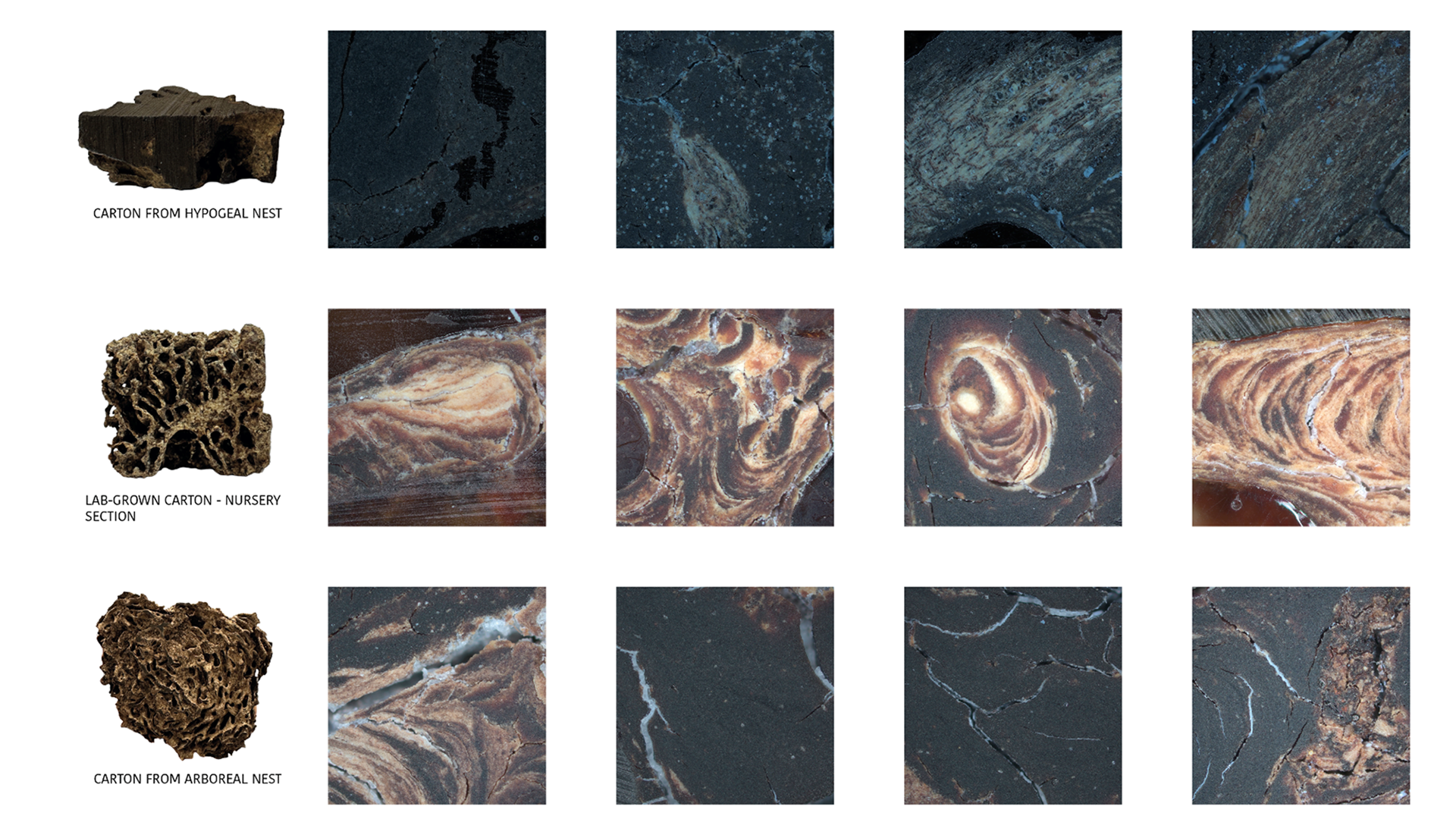
[Variation in Structural Micromorphology of Carton at 5x Magnification]
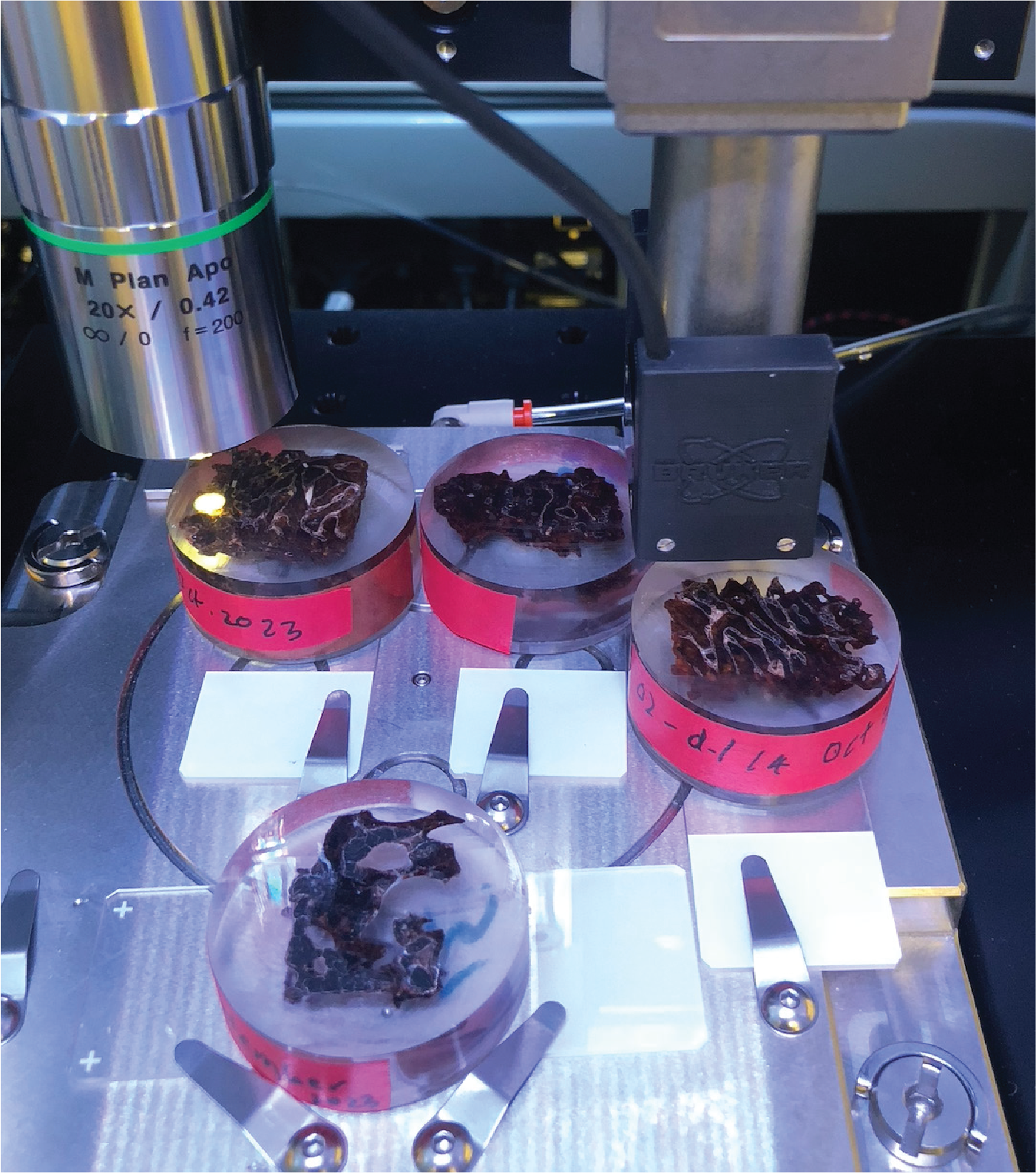
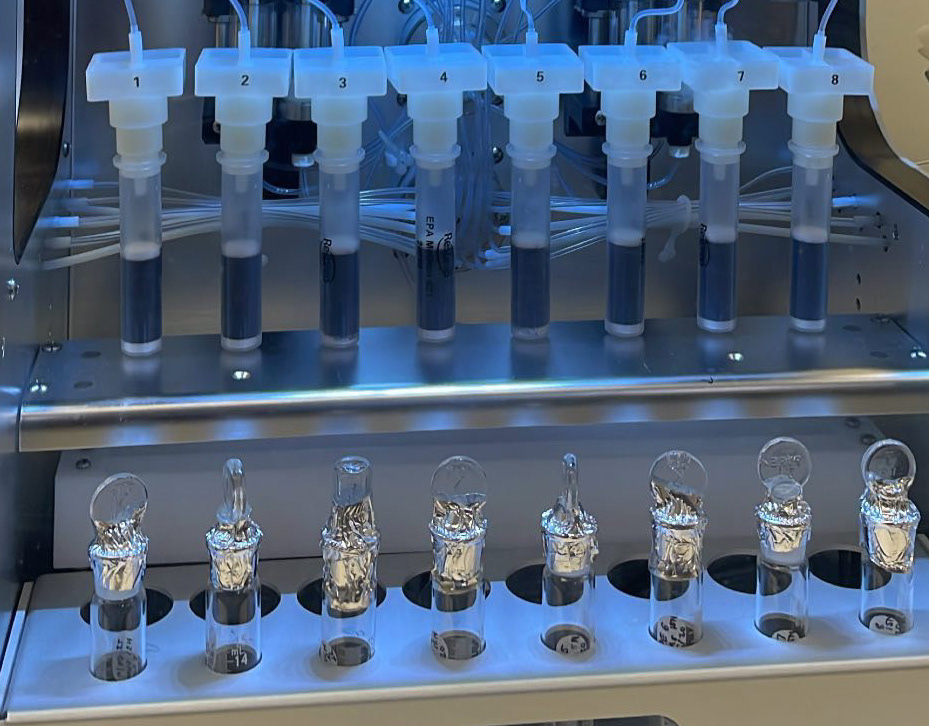
[Laboratory Setup of Nanoindentation Protocol for Carton Samples]
space
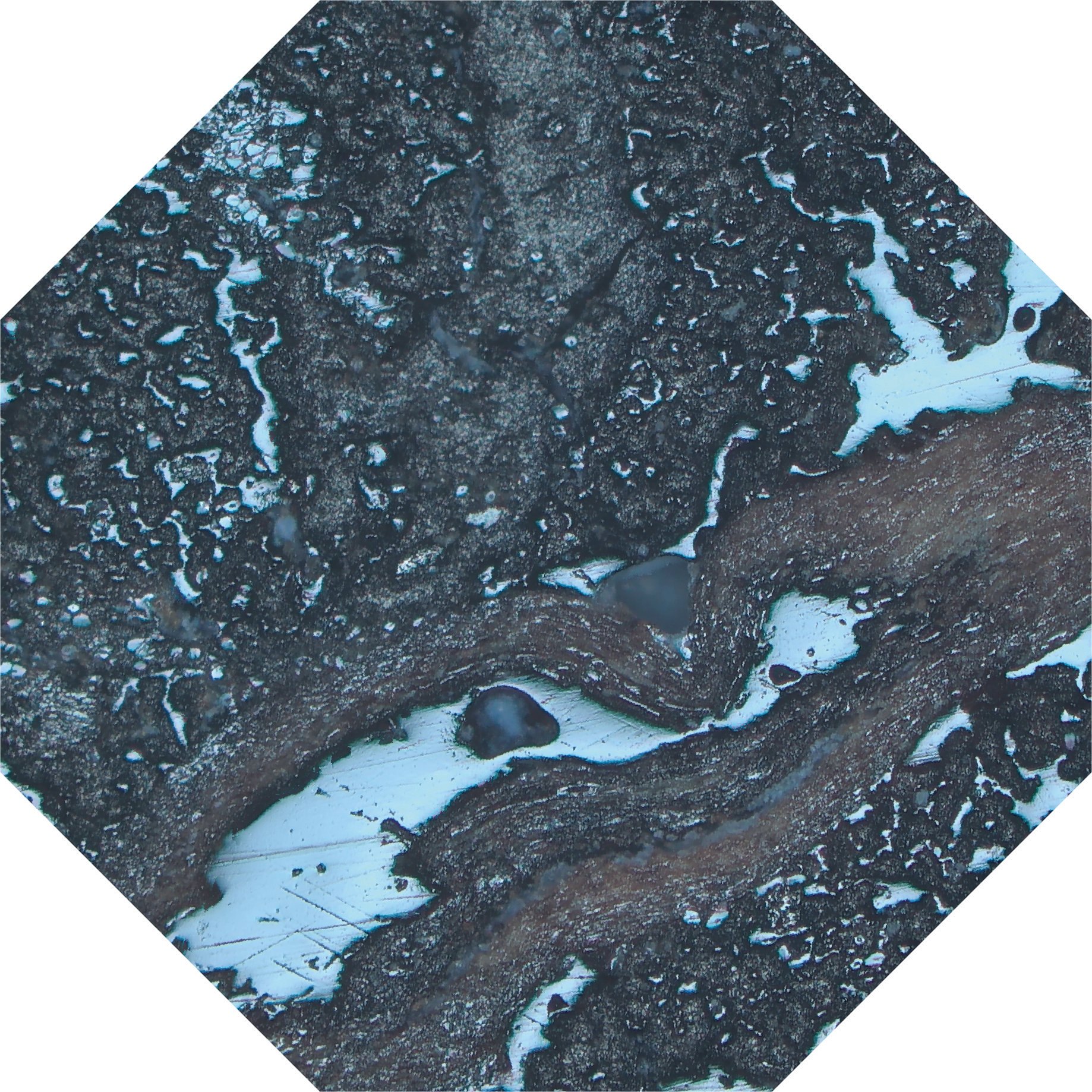
[Carton Embedded in Resin - 5x Magnification]
space
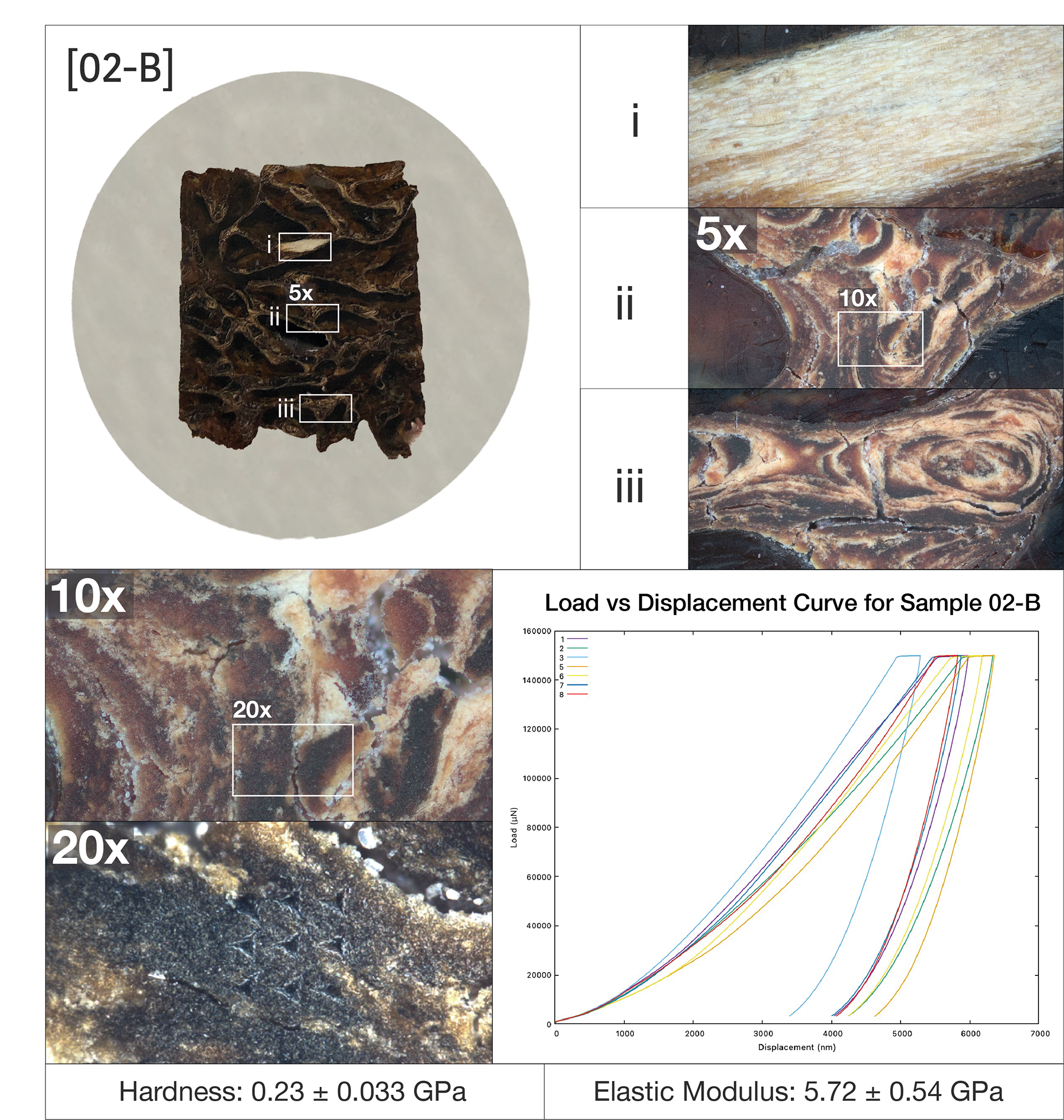
[Representative Example of Results Obtained from Optical Microscopy and Nanoindentation Protocol]
Research Abstract:
Cellulose-based composites possess notable properties such as high-strength to weight ratio, non-toxicity and biodegradability which make them suitable for applications ranging from aerospace to construction. Due to challenges with manufacturability, synthetic production of cellulose-based composites has failed to achieve comparable outcomes to their natural counterparts. Subterranean Termites produce a cellulose-based composite called Carton that is used as a construction material during nest formation. Carton is a sponge-like material that consists of biocemented fecal matter, soil, and saliva. Despite relatively weak microconstituents, Carton is light, resistant to weathering, and multi-functional, adapting macroscopic composition and architecture according to function. Although the macroscopic features of nests have been evaluated in existing literature, there are few studies on material structure, and those that exist are limited by specie, variable and test type. Elucidating the mechanical properties of cartons at the microscale may yield to learning about interfacial interactions between cellulose polymer and its matrix and solvents for solubilizing cellulose. Here we perform imaging, and Nanoindentation to determine the mechanical properties of carton.
Manuscript in preparation.